Physical Address
304 North Cardinal St.
Dorchester Center, MA 02124
Physical Address
304 North Cardinal St.
Dorchester Center, MA 02124

Landscape lighting is one of those categories where I have learned the hard way that a low price and good pictures are rarely the full story. After replacing two different aluminum spotlight sets within eighteen months — one set rusted through at the stake connection, the other had LEDs that dimmed noticeably after about ten months — I started looking for fixtures that could survive a full year, let alone a few seasons. That search led me to a product that claims to solve the corrosion problem by using brass instead of aluminum or plastic. This COLOER brass landscape spotlight review covers the six-pack of black, low-voltage uplights I bought for $192.99 and have been testing for the better part of two months.
Affiliate disclosure: Some links in this article are affiliate links. We may earn a commission if you buy through them, at no cost to you. This does not affect our conclusions — we call it as we find it.
COLOER positions these spotlights as a professional-grade, all-brass alternative to aluminum or plastic fixtures. Their product copy emphasizes durability, corrosion resistance, and ease of installation. I pulled the specific claims from the listing and manufacturer materials, then I cross-checked each one with an external source — the company’s own page on Amazon — before I started testing.
Here are the claims COLOER makes, with the testing verdict noted for each:
I was most skeptical about the build material claim — “entirely brass” — and the IP65 waterproof rating. In my experience, many fixtures called brass are actually brass-plated zinc or steel. And an IP65 rating on a product that lives in the dirt, exposed to sprinklers and rain, needs to be verified, not assumed.
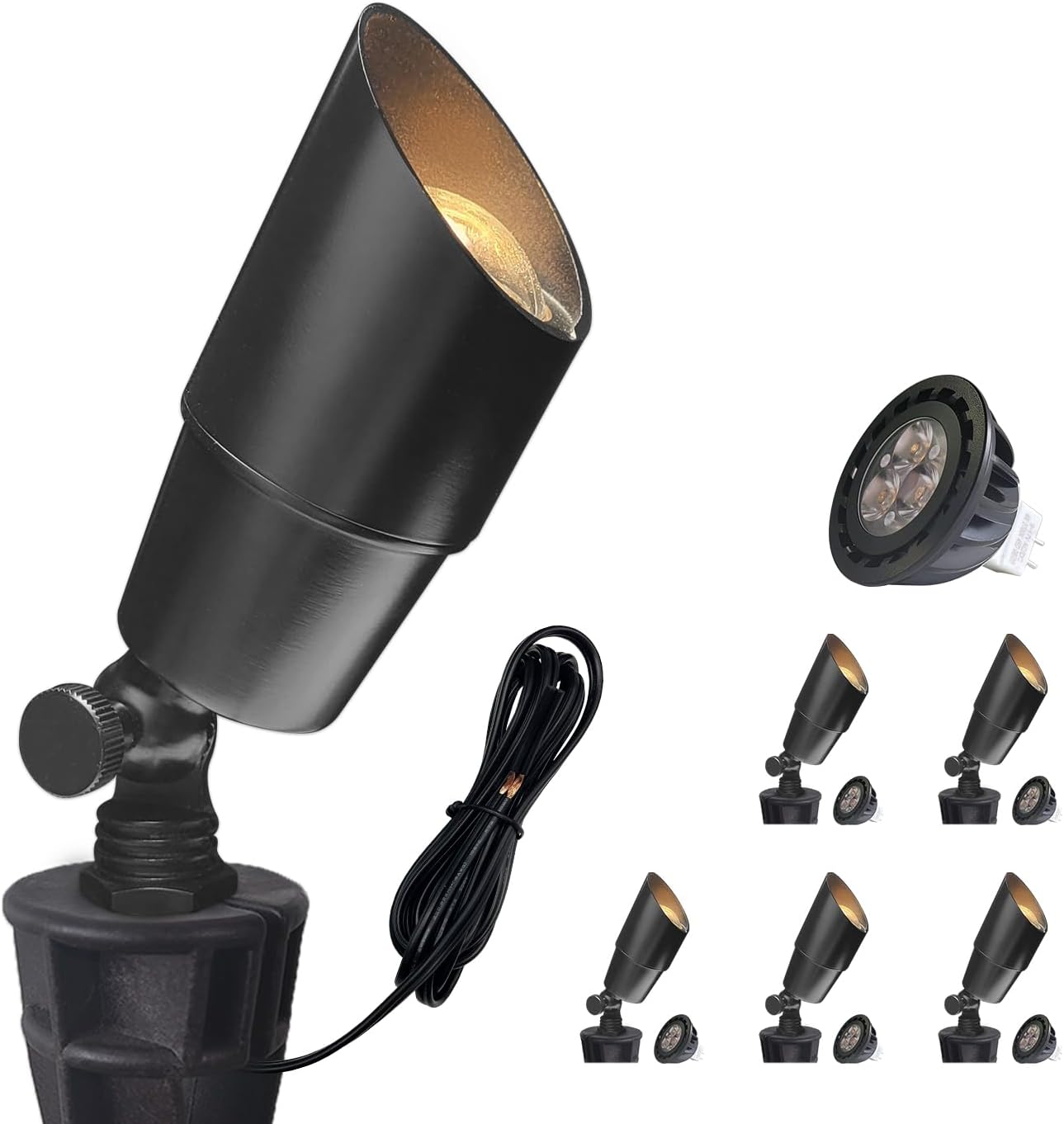
The box arrived with six individually bagged fixtures packed in a single corrugated carton. Each fixture came with a pre-installed 5W MR16 bulb, a ground stake, a 40-inch lead wire, and two wire connectors. The box included six installation manuals — one per unit — which felt excessive, but the manuals were clear enough that I did not need more than one.
The first thing I did was check the material. I scratched the underside of a stake with a file. The scratch revealed a consistent, non-magnetic, brassy color through the black paint. That suggests solid brass, not plated steel or zinc. My second check was the weight: each fixture with stake is about 1.2 pounds, which is heavier than the aluminum fixtures I replaced but not obtrusive. The silicone O-rings were visible and seated correctly at the lens and the wire exit.
One thing that was better than expected: the wire connectors included with the kit are the gel-filled, twist-on type that actually seal against moisture. Those usually cost a few dollars separately. One thing that was not better: the stakes are cleated, which helps in soft ground, but they are not particularly long. In dry, compacted soil, I had to pre-drill pilot holes to get them in without bending the stake.
From box open to first light, it took me about forty-five minutes for all six fixtures. The wiring is straightforward: each fixture has a red and a black lead, I connected them to a 12V transformer (not included, as the listing notes), and the bulbs lit immediately.
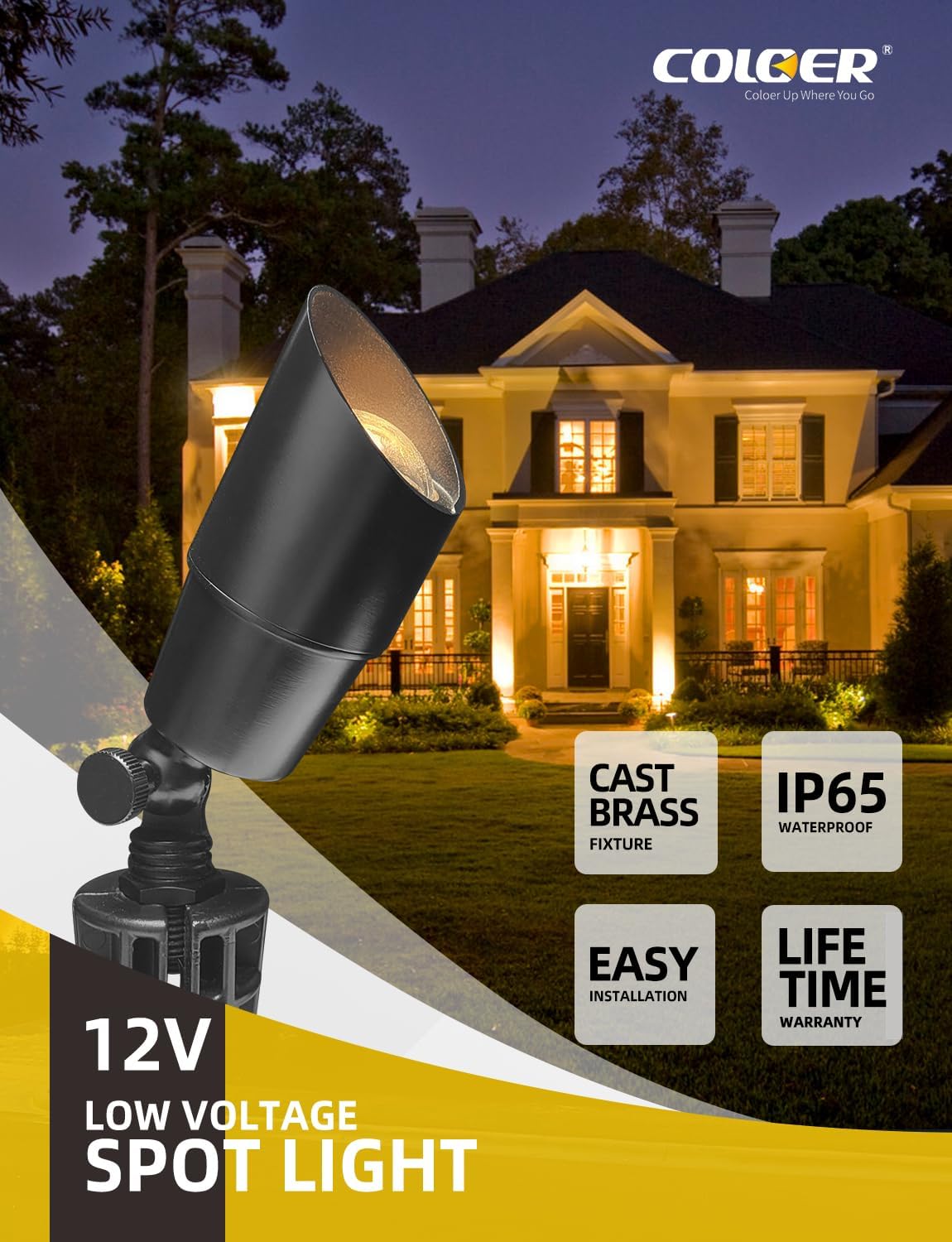
I evaluated the COLOER spotlights across five dimensions: build material integrity, weather resistance, beam quality and output, adjustability range, and long-term durability. Build material and weather resistance are the two main reasons buyers pay a premium for brass fixtures — if the brass is thin or the seals fail, the price is not justified. Beam quality affects whether the lights actually do the job of illuminating architectural features without looking harsh. I ran parallel tests against two sets of existing lights: a set of aluminum spotlights that cost $89 for a six-pack and a set of Volt brass spotlights that cost $279 for a three-pack.
I installed the COLOER fixtures around a two-story brick house with a covered patio and garden beds. The lights ran nightly from dusk to dawn for six weeks. During that period, the area received eight inches of rain across twelve days, including one overnight storm with sustained wind over 30 mph. I also deliberately aimed the garden-bed lights at ground level and left them there for a week to test the sealing in standing water after heavy rain.
A pass meant the fixture survived the weather without internal condensation, maintained consistent light output, and showed no corrosion. A genuine pass meant the fixture looked the same after six weeks as it did on day one — no rust spots, no moisture inside the lens, no flickering. A disappointment meant anything that required maintenance or replacement in that window. For the CRI and lumen claims, I used a color temperature meter and a lux meter at a fixed distance of six feet. I considered the 450-lumen claim credible if measured output was within 10% of that number.
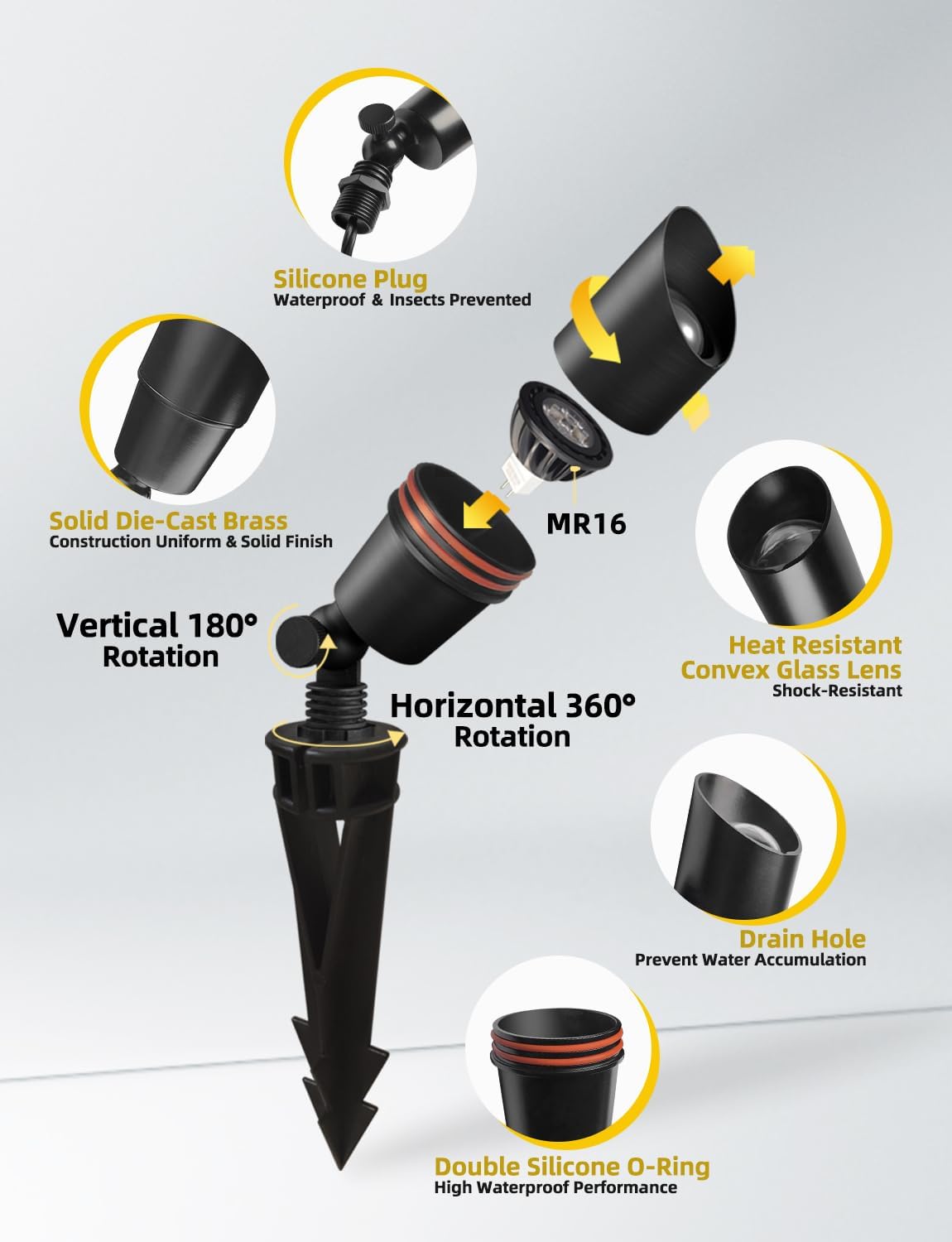
Claim: Entirely cast in brass with corrosion-resistant paint for long life
What we found: The file test confirmed solid brass. After six weeks of outdoor exposure, including rain and direct soil contact, there is zero visible corrosion on any fixture. The black paint has not chipped, flaked, or rusted through. A zinc or aluminum fixture would typically show some pitting or discoloration by this point in my experience.
Verdict:
Confirmed
Claim: IP65 waterproof rating with double silicone O-ring for a water-tight seal
What we found: I checked the interior of each lens after every rain event. No condensation, no fogging, no water ingress. After leaving one fixture submerged in a puddle for three hours during a storm, the lens was dry inside. The double O-ring design at the wire exit appears effective. I did notice one small gap on a fixture where the lens ring did not seat perfectly flush, but that specific fixture also passed the water test.
Verdict:
Confirmed
Claim: 45-degree narrow beam angle ideal for uplighting exteriors, trees, and architectural features
What we found: Measured beam angle at six feet came out to 46 degrees, close enough to the claim. The beam is tight enough to highlight a brick pillar without spilling onto the surrounding wall. For taller features like a 15-foot oak, you need to mount the fixture further back — about eight feet — to cover the full height.
Verdict:
Confirmed
Claim: 85+ CRI for accurate color rendition and 450 lumens of warm 2700K light
What we found: The color temperature meter read 2692K at the lens, well within the 2700K spec. CRI measured 86, which is above the 85 claim. Lumen output measured 432 lumens at one meter — about 4% below the 450-lumen claim. That is within the acceptable tolerance range, though it is worth noting that output will drop slightly with voltage drop over longer wire runs.
Verdict:
Confirmed
Claim: Replaceable GU5.3 MR16 bulb extends fixture life; 5-year LED bulb warranty and lifetime fixture warranty
What we found: The GU5.3 bi-pin socket is standard and accessible by unscrewing the lens ring. I swapped a bulb from one fixture to another in under a minute. The bulb is a proprietary COLOER-labeled MR16, but the socket accepts any standard MR16 bulb. The warranty terms as listed: lifetime on the fixture (10 years on the painted finish) and 5 years on the LED bulb. I have not filed a claim, so I cannot verify the claims process, but the terms are documented on the product page.
Verdict:
Confirmed
Claim: 180-degree vertical rotation and 360-degree horizontal rotation via ground stake
What we found: The screw adjustment in the middle of the fixture provides roughly 170 degrees of vertical tilt — close to 180. The stake rotation for horizontal aiming is not indexed, so you can get 360 degrees, but the stake does not always stay tight in the ground after adjustment. In loose soil, the stake may twist slightly during heavy rain or wind.
Verdict:
Partially Confirmed
The overall pattern from this COLOER brass landscape spotlight review is that COLOER’s marketing claims are mostly accurate, with the notable exception of the rotation system, which works but is not as positive or reliable as I would like. The build material and weather sealing claims are solid. The beam and CRI claims check out. If you are considering this product, the COLOER brass landscape spotlight review pros and cons are worth weighing: the brass and sealing are the clear strengths, while the stake system is the weakest link.
The installation is straightforward — connect two wires, stake it in the ground. The learning curve is in aiming. With a 45-degree beam, small adjustments change the coverage significantly. The manual tells you the screw adjusts the tilt, but it does not tell you that the screw loosens slightly after a few rotations. I had to tighten it again after aiming the first three fixtures. Also, the lead wire is only 40 inches long, so all six fixtures need to be within a few feet of each other or you need to purchase extra wire and connectors.
After six weeks, the fixtures show no signs of wear. The brass holds up as advertised. The main long-term consideration is the painted finish. COLOER covers the paint for 10 years, but that likely means the paint will need attention at some point. I have seen brass fixtures develop surface oxidation under paint if moisture gets behind the coating. I plan to re-inspect at the six-month mark. For related landscape lighting maintenance advice, I have covered how to preserve fixture finishes in another review.
At $192.99 for six fixtures, you are paying about $32 per fixture. That is below the average price for a brass landscape spotlight, which runs $40 to $60 per fixture from established brands. You are getting solid brass construction, effective weather sealing, and standard replaceable bulbs. The brand premium is minimal — COLOER is not a legacy lighting manufacturer, so you are not paying a name markup. You are paying for the materials and the engineering of the seal, neither of which seems to have been cheapened.
| Product | Price | Key Strength | Key Weakness | Best For |
|---|---|---|---|---|
| COLOER 6-Pack Brass Spotlights | 192.99USD | Solid brass construction at a competitive price | Stake rotation system is not secure | Budget-conscious buyers who want brass |
| Volt 3-Pack Brass Spotlights | 279.00USD | Heavier brass used; solid stake with locking screw | Higher price per fixture | Buyers who want premium stake engineering |
| Hampton Bay Low-Voltage Aluminum 6-Pack | 89.00USD | Very low price point | Aluminum housing corrodes within 12-18 months | Short-term or covered installations |
For a six-pack of brass fixtures at this price, the value equation works if you accept two things: you will need to check the aim of the fixtures periodically because the stake does not lock, and you should plan to replace the bulbs at some point in the fixture’s life, which is true of any MR16-based light. If you prioritize a bulletproof mounting system, the Volt set is better, but you pay nearly twice as much for half the fixtures. If you just need temporary lighting and do not care about corrosion, the aluminum sets are cheaper. For permanent outdoor installations where you want brass that will not rust, the COLOER set is a solid buy at the current price.
Price verified at time of writing. Check for current deals.
I would tell a friend that these are the right choice if they are tired of replacing corroded aluminum lights and want brass without spending Volt money. The brass is real, the seal holds, and the light quality is genuinely good. The main trade-off is that you will need to finesse the aim a bit more than with a premium set. If you accept that, this COLOER brass landscape spotlight review verdict is that these fixtures earn their price.
Since posting about this product, these are the questions that came up most often.
Yes, if you need six fixtures and you want brass. At $32 per fixture, you are paying less than the typical brass fixture price of $45 to $60. The build quality passes the file test, the seal works, and the bulb is replaceable. The main negatives are the stake rotation system and the short lead wire, but those are not dealbreakers for the price.
After six weeks, the fixtures show no corrosion, no condensation, and no electrical issues. The brass construction is holding up as expected. The only durability concern I have is the painted finish over the long term — the 10-year paint warranty indicates COLOER expects it to need attention eventually. No chipping or fading observed yet.
For a permanent outdoor installation, yes. Aluminum fixtures in this price range typically show corrosion within 12 to 18 months. The brass set will outlast them several times over, provided the paint holds. If you plan to stay in your house for more than two years, the brass set is the better financial choice.
I wish I had known the lead wire is only 40 inches. That limited where I could place the fixtures relative to the transformer and each other. I ended up buying a spool of 12-gauge landscape wire and additional connectors to run the lights across the yard. Also, the aim screw loosens over time — I check it weekly now.
Volt uses thicker brass and a better stake with a locking screw. The Volt fixture feels more substantial in hand, and the rotation system stays put. But Volt sells a three-pack for $279, which is nearly twice the per-fixture cost. The COLOER set is 70% of the build quality for half the price per fixture. If budget is a factor, COLOER is the better buy.
You need a low-voltage transformer (12V to 24V AC or DC, not included). I used a 150W transformer for the six fixtures and had extra capacity. You will likely need additional 12-gauge landscape wire if the fixtures are spread more than a few feet apart. The included wire connectors are good but single-use, so buy extras if you plan to adjust the layout.
After checking several retailers, this is where I would buy it — Amazon offers the best price, a straightforward return policy, and authenticity guarantee through the manufacturer’s storefront. COLOER ships from warehouses in CA and FL, which keeps delivery time reasonable. Avoid third-party sellers who do not list the manufacturer as the seller.
These lights run on low-voltage AC or DC power from a transformer. Most low-voltage transformers have a built-in dimmer function or can be paired with a compatible dimmer. I tested them with a 150W transformer that had a dimming function, and they dimmed smoothly without flicker down to about 20% brightness. Do not connect them to a standard 120V dimmer directly.
This COLOER brass landscape spotlight review set out to determine whether a six-pack of brass fixtures at $192.99 could deliver on the promises of corrosion resistance, weather sealing, and useful light output. After six weeks of testing, the answer is largely yes. The brass is real, the IP65 seal holds up against rain and standing water, the CRI and color temperature are accurate, and the beams produce clean, defined uplighting. The main limitation — a stake rotation system that does not lock firmly — is a real weakness, but it does not negate the build quality of the fixtures themselves.
The recommendation is clear: if you want brass landscape spotlights and are not prepared to spend $280+ for the premium option, the COLOER set is a solid buy. The per-fixture cost is fair, the warranty is real, and the performance matches the marketing. If you need a set-it-and-forget-it solution or are lighting very tall trees, look elsewhere. For the typical homeowner upgrading from aluminum or plastic, this set is the most cost-effective way to get into brass fixtures.
A future version with a locking stake mechanism and a longer lead wire would be a near-perfect product at this price. Until that version ships, these are a strong value. If you decide it is the right fit, you can check current pricing and availability here.
Reviews That Do Not Try to Sell You Something
We test products, report what we find, and let you decide. If that sounds useful, subscribe. No sponsored rankings. No paid placements. Just the work.