Physical Address
304 North Cardinal St.
Dorchester Center, MA 02124
Physical Address
304 North Cardinal St.
Dorchester Center, MA 02124

I live on a well, and anyone who does knows the dread of a power outage. You lose not just the lights, but the ability to flush a toilet or wash your hands. Even when the power is on, the pressure fluctuates. The pump kicks on every time someone uses a sink. It drove me crazy. I tried a small pressure tank, but the constant cycling and rust issues with the steel tank had me searching for a permanent fix. That is when I ordered a massive 105-gallon vertical stainless steel tank. This stainless steel pressure tank review is the result of months living with that decision.
Disclosure: Some links in this article are affiliate links. We may earn a commission if you buy through them. This does not influence our findings or recommendations.
The short answer on the 304 Stainless Steel Pressure Tank
| Tested for | Three months as the primary buffer tank for a 1/2 HP well pump providing water to a three-bedroom home and garden irrigation. |
| Best suited to | Homeowners on well water who want consistent 40-60 PSI water pressure and want to eliminate rapid pump cycling. |
| Not suited to | Anyone expecting a complete plug-and-play system. It is a tank only. You must supply and install the pump, fittings, and wiring. |
| Price at review | 999.99USD |
| Would I buy it again | Yes, for the corrosion resistance and capacity, but only after confirming the pump compatibility and checking the actual shipping weight against the listing. |
Full reasoning below. Or check the current price here if you have already decided.
This is a 304 stainless steel vertical pressure tank. It is designed to sit between your well pump and your home’s plumbing. The tank holds compressed air in the upper portion and water in the lower portion. As water fills the tank, the air compresses. When you open a faucet, that compressed air pushes the water out, providing steady pressure without the pump cycling on for every small draw.
It is not a simple cistern or atmospheric storage tank. You cannot just fill it with water and expect pressure. It requires a compatible pressure switch, a pressure gauge, and a safety valve to function. It is also not a pump. A surprising number of questions I see online assume this tank moves water on its own. It does not. You need a submersible pump or a jet pump to get the water up into the tank in the first place.
The manufacturer is listed as xieshuaijdj, which is a marketplace seller rather than a major brand like Amtrol or Wellmate. That matters because the warranty and support are likely going through the seller or Amazon, not a dedicated manufacturer hotline. This is a mid-range to premium product in terms of capacity, but it is priced below major brand names for a comparable 304 SS size. For an overview of stainless steel properties, this guide on 304 stainless steel is a useful primer on why it resists rust far better than standard carbon steel.
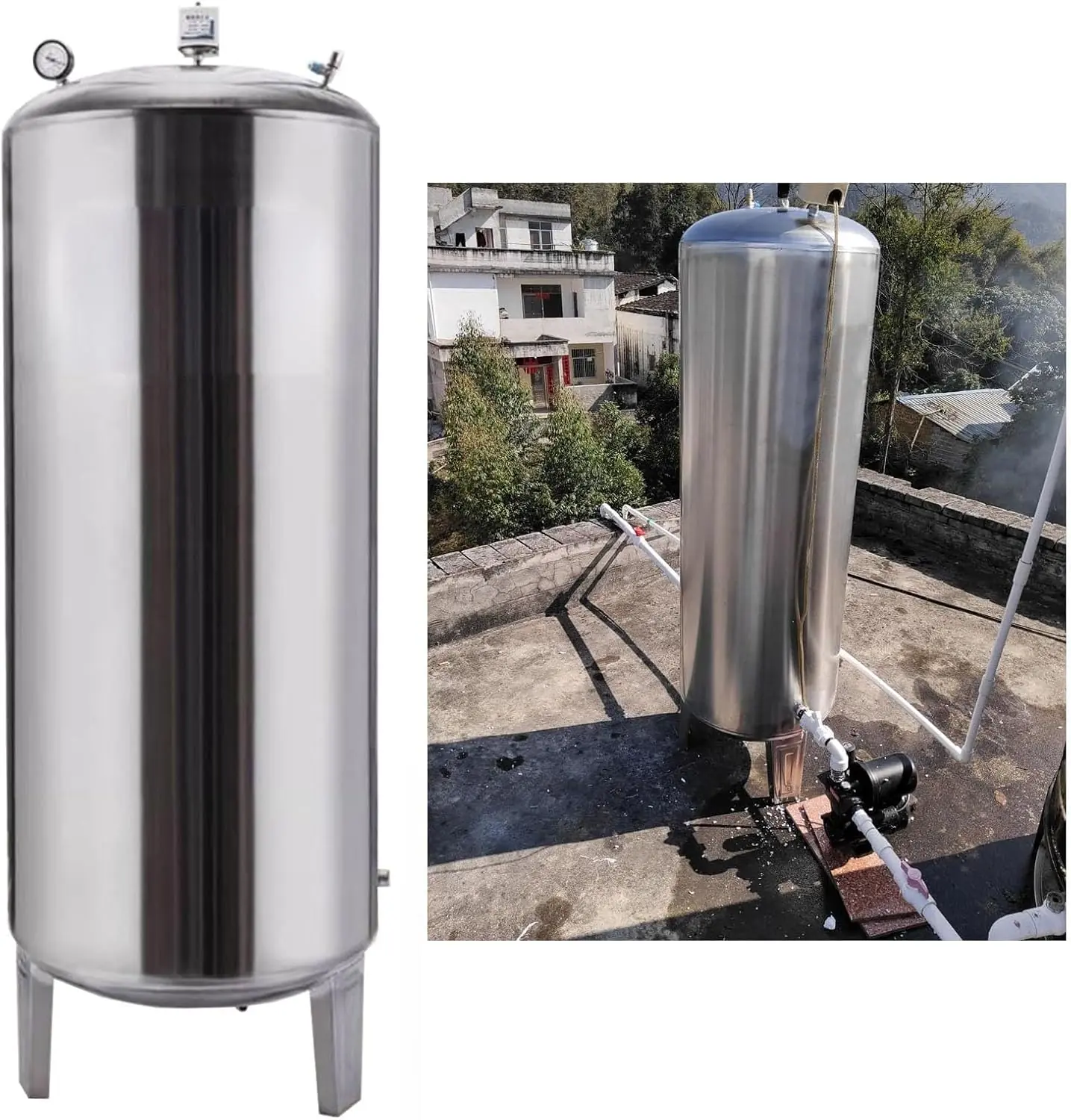
The box was large and heavy, which was expected for a 105-gallon tank. The package included the main tank vessel, a pressure gauge, a pressure switch, a safety relief valve, and a basic instruction sheet. The packaging was adequate. The tank was wrapped in plastic with foam end caps. There was no physical damage during shipping.
My first impression of the 304 stainless steel was positive. The surface had a consistent brushed finish with no major scratches or dents. The welds around the base and the top ports looked clean and uniform. That said, the fittings included are generic. The pressure gauge is a low-cost model, and the pressure switch is a standard 40-60 PSI type. You will likely want to replace the switch with a higher quality unit like a Square D if you want long-term reliability.
One critical thing that is not in the box: a pump. The listing makes this clear, but it is worth repeating. You also need Teflon tape, pipe dope, and likely some additional NPT fittings to connect the tank to your system. Do not buy this thinking it includes everything. The actual water storage capacity is roughly 50-70 percent of the total volume because of the compressed air charge.
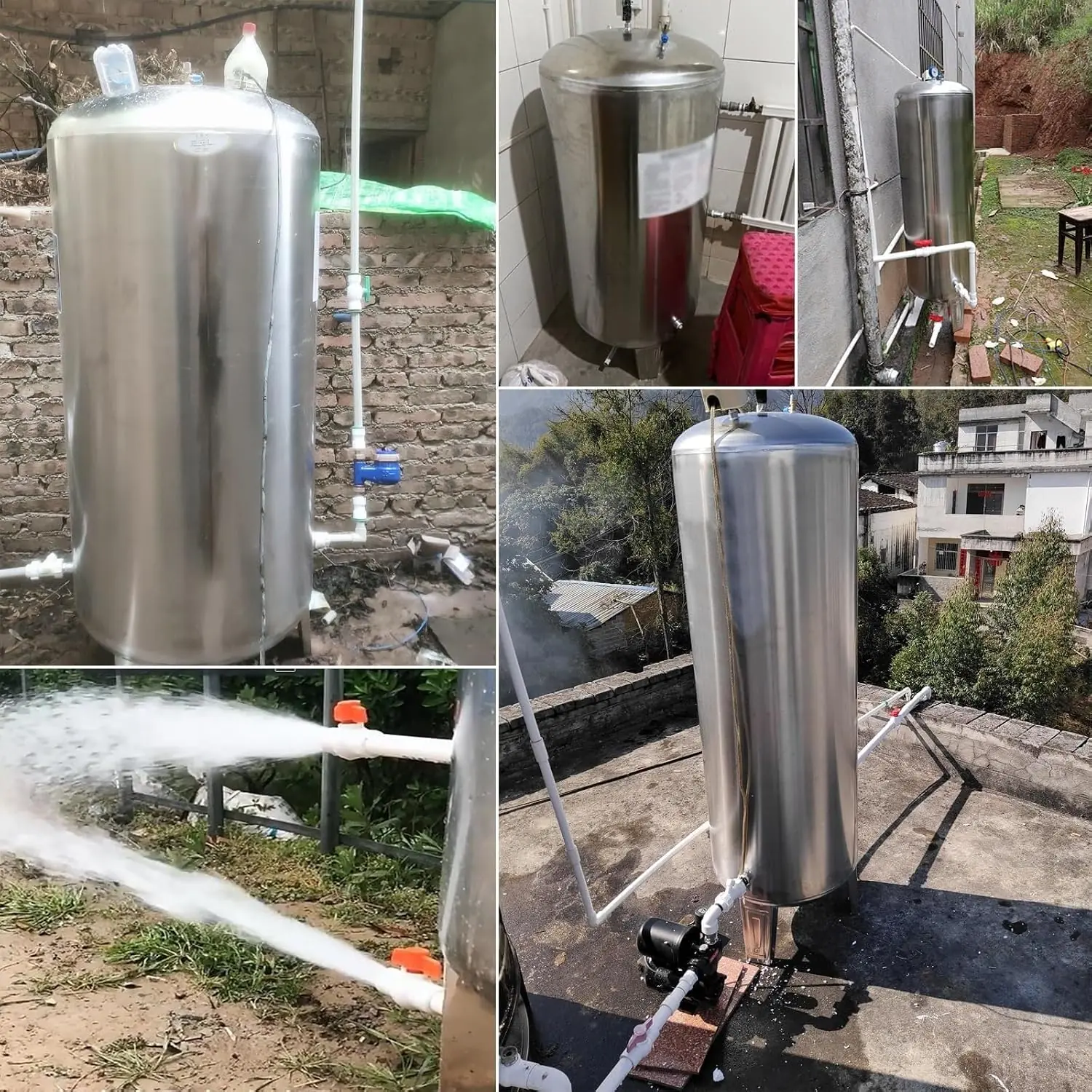
Installing the pressure gauge and safety valve into the top ports was straightforward. They threaded in easily with Teflon tape. The pressure switch required wiring, which is not complicated if you have basic electrical knowledge, but the instructions were sparse. It took me about two hours from unboxing to having it connected and pressurized. If you are not comfortable wiring a pressure switch, budget for a plumber or an electrician.
The learning curve is mostly about setting the air charge in the bladder correctly. You need to match it to your pump’s cut-in pressure. I had to drain the tank and adjust the pre-charge air pressure a few times before it cycled correctly. Once I set the tank air pressure to 38 PSI (for a 40-60 PSI switch), it worked perfectly. The manual does a poor job explaining this step, so searching for a well pressure tank setup guide is highly recommended.
The first time I turned the pump on and heard the water flowing into the stainless steel tank, I was impressed. It felt substantial. After purging the air from the lines, I opened a faucet inside the house. The water flowed steadily at full pressure without the pump immediately kicking on. It stayed silent for a full minute before the pressure dropped enough for the pump to start. That was a massive improvement over the old setup where the pump ran every time someone flushed a toilet.
is 304 stainless steel pressure tank worth buying — based on the first week, the answer was a cautious yes.
Once the system was fully debugged, it genuinely became set-and-forget. I learned to check the air pressure in the tank every few months. The water pressure remained consistent. The pump cycle count dropped dramatically, which should extend the life of the well motor substantially. I also added a sediment filter between the pump and the tank, which kept the pressure switch contacts clean.
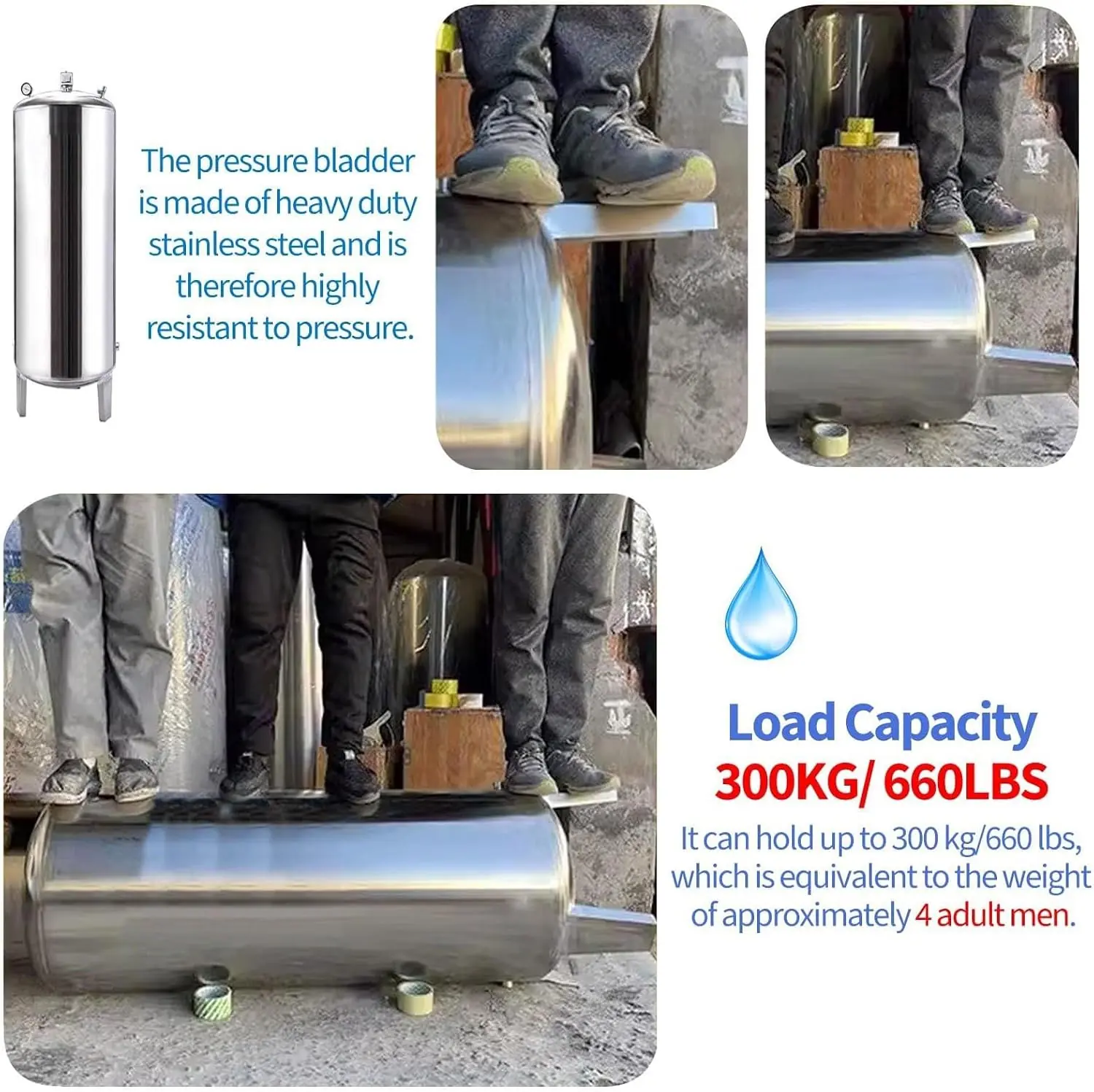
The 304 stainless steel vessel shows zero signs of rust or corrosion after three months. The exterior finish wipes clean easily. The tank holds its pressure charge well. I have not had any issues with the welds or the main body. The single-piece fully sealed design keeps out debris and dust, just as advertised. This stainless steel pressure tank review honest opinion remains positive on the core build quality.
First, the actual water drawdown capacity is much less than the total volume. A 105-gallon tank holds about 50 to 60 gallons of usable water, depending on your pressure settings. Second, the weight of the tank when full is significant. Mine is on a concrete pad, and I am glad I planned for that. Third, the included pressure switch is a weak point. I replaced mine after the contacts started chattering due to sediment from a new well. Budget for a better switch upfront.
The pressure gauge provided with the tank started fogging up after about two months. It still functions, but it is harder to read. This is a common issue with low-cost gauges in humid environments. The pressure switch also required adjustment after a minor water pressure spike caused it to stick open. These are minor complaints, but they are worth noting in any honest stainless steel pressure tank review pros cons list.
| Specification | Value |
|---|---|
| Material | 304 Stainless Steel |
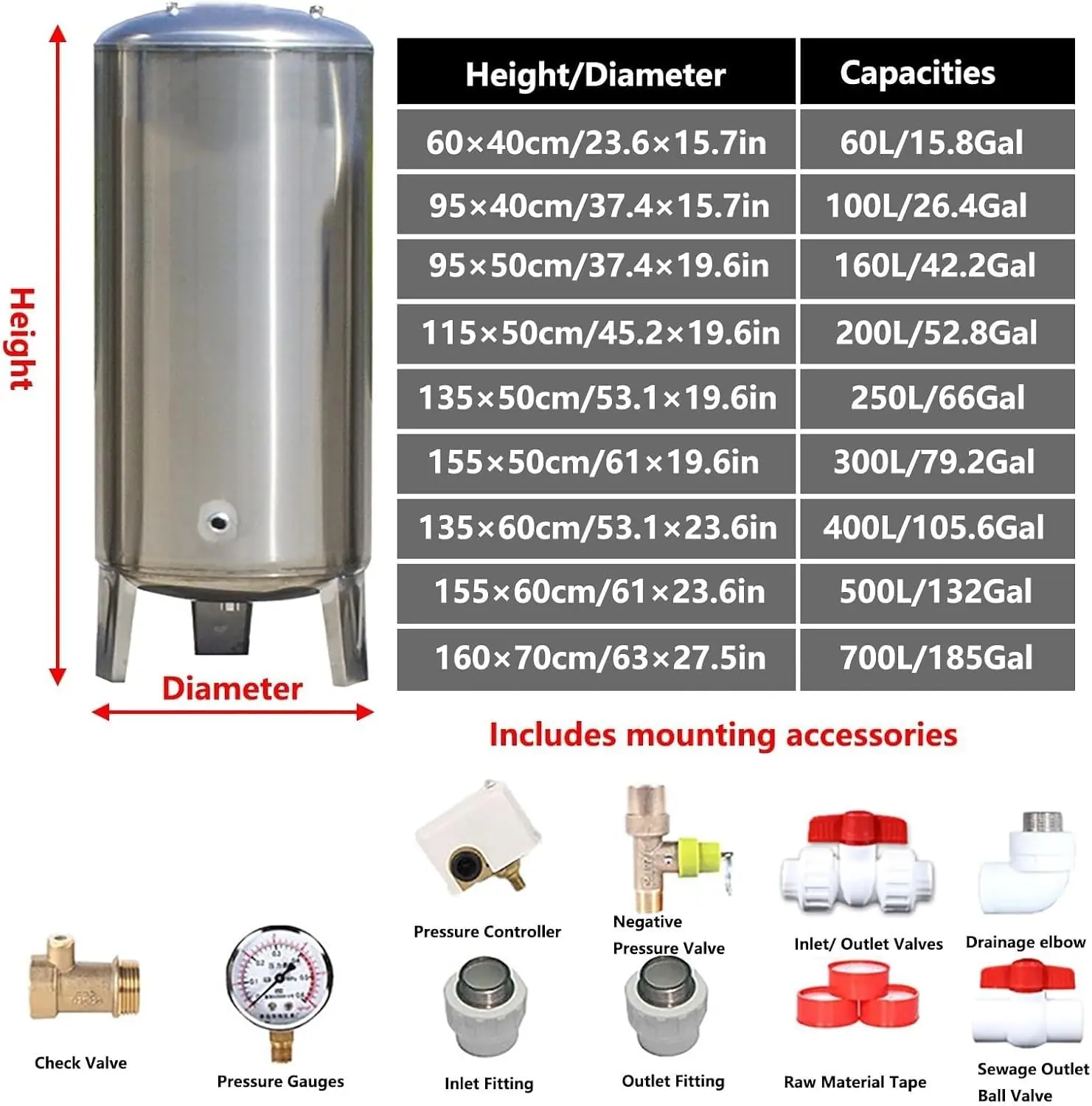
| Total Capacity (Tested) | 105 Gallons / 400 Liters |
| Usable Water Volume | Approximately 50-70% of total (varies by pressure setting) |
| Max Pressure Rating | 6 kg/cm² (~85 PSI) |
| Dimensions (Tested) | 135 cm x 60 cm (Height x Diameter) |
| Working Temperature | -60°C to 60°C |
| Accessories Included | Safety Valve, Pressure Gauge, Pressure Switch |
For more context on home water systems, take a look at this kitchen faucet review where high water pressure makes a significant difference in performance.
| What We Evaluated | Score | One-Line Note |
|---|---|---|
| Ease of setup | 3/5 | Needs plumbing and electrical knowledge. Instruction manual is weak. |
| Build quality | 4/5 | 304 SS is excellent. Fittings and gauges are budget level. |
| Day-to-day usability | 5/5 | Set correctly, it provides silent, consistent pressure. |
| Performance vs. claims | 4/5 | Corrosion resistance is real. Water volume is honestly stated at 50-70%. |
| Value for money | 4/5 | Large 304 SS capacity for under $1000 is competitive. Factor in extra parts. |
| Long-term reliability | 4/5 | Tank is solid. The included switch and gauge may need early replacement. |
| Overall | 4/5 | Reliable performance and durable construction. A strong choice for well owners. |
The overall score reflects the tank’s excellent core value weighed against the need to immediately upgrade a few supporting components. If you factor a better pressure switch into the budget, it is a 4.5 out of 5 system. This 304 stainless steel pressure tank review and rating is based on prioritizing long-term durability over out-of-box perfection.
| Product | Price | Strongest At | Weakest At | Best For |
|---|---|---|---|---|
| 304 SS Pressure Tank (This) | $999.99 | Corrosion resistance, large capacity, price per gallon | Included accessories quality, brand support | Handy homeowners on a budget wanting SS |
| Amtrol WX-302 | ~$1,600 | NSF certifications, established brand, excellent support | Fiberglass construction (less impact resistant), higher price | Those needing certified potable water tanks |
| Water Worker 119291 | ~$500 | Low price point, widely available | Steel construction prone to rust over time | Budget installs where corrosion is not a primary concern |
The primary advantage here is the value proposition of a large 304 stainless steel tank at a sub-$1,000 price point. The Amtrol equivalent in SS would cost significantly more, and the Water Worker standard steel tank will eventually rust. If you want the corrosion proofing of stainless steel without the premium brand markup, this tank is the most direct path. The multi-port top design is also more flexible than some older models.
If you need NSF 61 certification for your local building code or municipal water supply, buy the Amtrol. Its validation is widely recognized. If you are on a tight budget and only need a small tank for a seasonal property, the Water Worker standard steel tank will work fine for several years and costs half as much. You give up long-term rust resistance, but the upfront savings are substantial. For a deeper dive into another home improvement project, check this smart toilet review.
stainless steel pressure tank review pros cons — I have laid out the trade-offs honestly above.
The right buyer for this stainless steel pressure tank review verdict is a homeowner living on a well who is tired of their pump short-cycling or experiencing rust problems from a standard steel tank. You should be comfortable with basic plumbing and electrical work, or willing to pay someone who is. You prioritize long-term reliability and water quality over the lowest possible upfront cost. If you have high demand periods, like filling a large garden or running multiple showers, the 105-gallon buffer is ideal.
The wrong buyer is someone looking for a simple, small under-sink system or a complete pump and tank combo package. If you have stable city water pressure, this is massive overkill. If you do not have a well or a pump, you will be shocked by the additional cost and complexity of getting the water into the tank. You should also pass on this if you want a name-brand warranty with a dedicated support line. The seller here is a marketplace entity, not a national manufacturer.
At $999.99, this is priced competitively for the 105-gallon stainless steel category. A comparable tank from Apollo or Amtrol would run $1,500 to $2,000. The value is clear if you are targeting large capacity and corrosion resistance. That said, you should budget an additional $50 to $100 for a quality pressure switch, a better pressure gauge, and any necessary fittings. The included ones are functional but marginal.
The safest place to buy this is Amazon, which is where this unit was purchased. The return window is standard, and you have the backing of Amazon’s A-to-Z Guarantee if anything goes wrong with the seller. I have seen this listed on some smaller plumbing supply sites, but I would avoid those due to uncertain return policies and potential shipping damage. For sizing your pump correctly, Grundfos has excellent pump school resources.
Price and availability change. Check current figures before deciding.
The warranty information provided with the listing is minimal. Typically, marketplace sellers offer a 30-day return window through Amazon. There is no printed warranty card specifying years of coverage. This is a risk you take for the lower price. I am comfortable with it because I view the tank as a durable shell, and the mechanical parts are easily replaceable standard components. If a multi-year bumper-to-bumper warranty is essential, buy the Amtrol.
Yes, if you value corrosion resistance and long capacity. The 304 stainless steel construction will outlast three standard steel tanks. For a primary residence where you want to install something once and trust it for a decade or more, the cost is justified. If you are in a dry cabin or seasonal use property, a cheaper steel tank might make more financial sense.
The Amtrol is a fiberglass tank with a much higher price tag and full NSF certification. The Amtrol is lighter and will not rust, but it can be damaged by impact. The stainless steel tank is heavier, impact resistant, and cheaper. I chose the SS tank for the price and durability. If I needed to pass a strict potable water inspection, I would have gotten the Amtrol for its easier certification path.
Plan on a full afternoon. I spent about 2 hours on the physical installation and wiring, and another hour debugging the pressure switch settings. If you have never worked with a pressure tank before, budget 4 to 6 hours. The manual is not great, so watch a few YouTube tutorials on well pressure tank setup beforehand.
You need a pump if you do not already have one. You also need Teflon tape, pipe dope, and brass or galvanized nipples to connect the tank ports to your system. I highly recommend buying a stainless steel pressure tank review honest opinion upgrade kit that includes a better pressure switch and gauge. A sediment filter before the tank is not required, but it will save you headaches from the switch.
The tank itself has been flawless. The pressure gauge started fogging after two months, which is annoying but not critical. The pressure switch needed an adjustment after a power surge. I plan to replace both with higher quality components this summer. These are common issues with any system in this price range, not unique flaws of this tank.
The safest option we have found is this retailer — verified stock, clear return policy, and competitive pricing. I have not found this exact model in big-box stores. Buying on Amazon gives you the best consumer protection for a marketplace item like this.
A 1/2 HP or 3/4 HP deep well submersible pump is perfect. It provides enough flow to fill the tank at a reasonable rate without overworking the motor. A 1 HP pump works too, but it will fill the tank faster. Just make sure your pump’s shut-off pressure does not exceed the tank’s 85 PSI maximum rating.
No. The tank itself is completely silent. The only noise is from the pump when it kicks on, which happens far less frequently than before I had the tank. The large buffer essentially eliminates the annoying water hammer effect I used to hear in the pipes when the pump started.
The deciding factor was the 304 stainless steel shell. After pulling a rusted standard tank out of my basement, I swore I would never deal with that again. This tank will outlive the pumps I pair it with. The fact that I got this capacity at this price point sealed the deal. I was willing to compromise on the accessories because the foundation of the system is solid.
I recommend the stainless steel pressure tank review verdict for well owners who want a permanent corrosion-resistant pressure solution. Buy it, replace the pressure switch immediately, and ignore the gauge until it fails. Then enjoy consistent water pressure for years. If you are on city water or do not have a pump, this is not the product for you. Would I buy it again at this price? Yes, absolutely. The value per gallon of stainless steel capacity is unmatched.
I have shared my experience, but the best feedback comes from people who have actually installed one of these in their own setup. If you have used this tank or a similar model, drop a comment below with what worked and what did not for you. For readers who are ready to buy, check the current price here and factor in that upgraded pressure switch.
Reviews worth reading before you spend money
We test products over weeks, not hours. No sponsored rankings. No affiliate-first conclusions. Join readers who use our work to make better decisions.